Search
 Members Area
 23 Sep 2025
Events
23 Sep 2025
Events
Recap ANTHOS’26
The second Summit on Advanced (Nano)Materials and Technologies: From Needs to Solutions
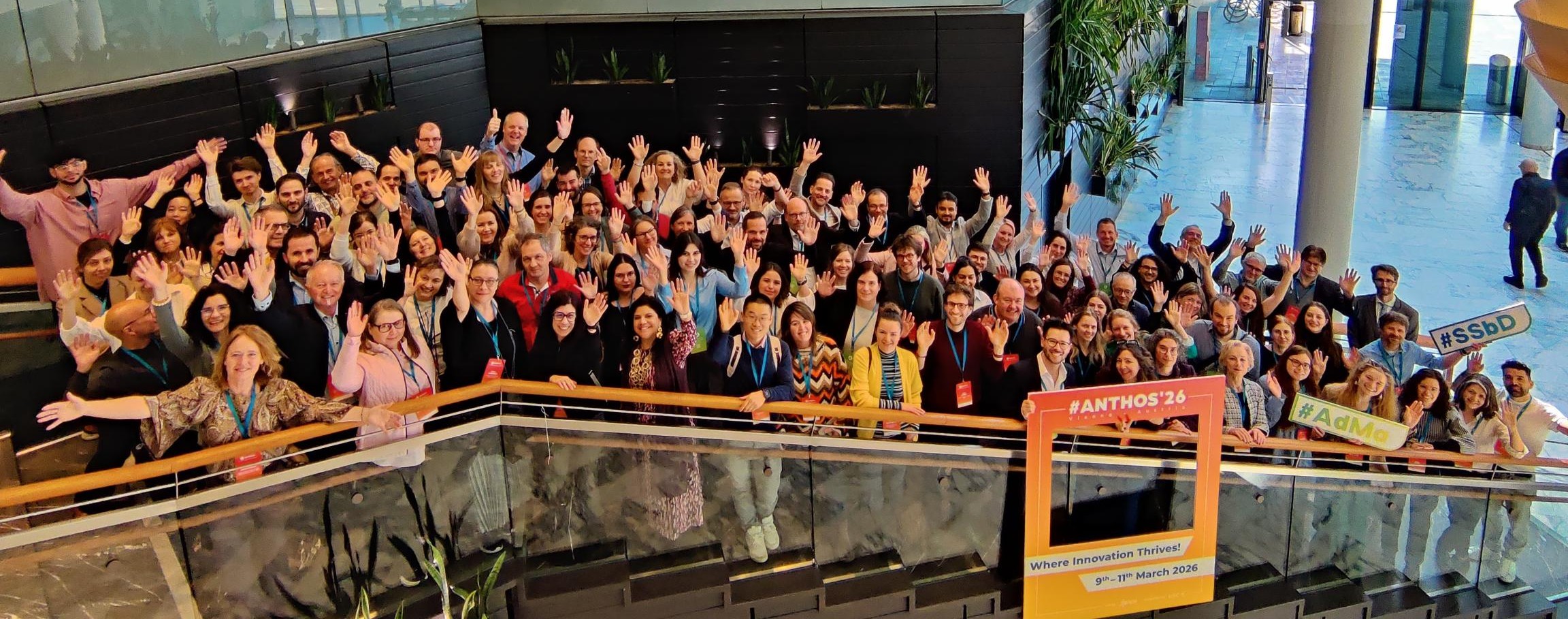
From the 9th to the 11th of March 2026 the ANTHOS’26 Summit took place at the TWELVE Conference Center in Vienna (Austria). The Summit was organized all around sessions and round tables with experts focusing on the goal of the conference – Understanding the needs of the SSbD stakeholders i.e., the initiators, the legislators, regulators and implementors, and the solutions SSbD provides.
The summit counted with more than 120 participants from research organizations and academia (61%), SMEs and large industry (22%), national authorities (5%) and EU and policy institutions (3%), as well as other organizations (4%) active and interested in safety and sustainability and the Advanced Materials (AdMa) field, related processes and products.
ANTHOS’26 has been organized by BNN, supported by the NSC Community (The Network for Safety and Sustainability of Chemicals and Materials), and 12 EU and national-funded projects (AI-TranspWood, AlChemiSSts, ATIMA, BIOSAFIRE, CheMatSustain, InnoMatSyn, INTEGRANO, PINK, PLANETS, SSbD4CheM, SUNRISE, TOXBOX) – all of them part of the NSC community. Furthermore, the Austrian ministry of Agriculture and Forestry, Climate and Environmental Protection, Regions and Water Management (BMLUK) as well as the ministry of Innovation, Mobility and Infrastructure (BMIMI) supported the conference. The event brought together leading Safe and Sustainable by Design (SSbD) experts, including partners of EU-funded projects as well as other representatives of key organizations and international stakeholder groups, such as the European Commission (EC), the OECD, ECHA, and Austrian governmental representatives. All of them actively provided the ideal stage to disseminate results obtained in the different projects and exchanging state-of-the-art knowledge within the SSbD and AdMa communities.

The three days of the summit included activities such as a co-creation workshop organized by some of the EU-funded participating projects, the BNN Networking Event, a NSC Steering Group Meeting including an interactive workshop, and a number of sessions and round tables, tackling the needs that the different AdMa community stakeholders have and how EU-funded projects are actively contributing to providing specific solutions. In the next pages we provide you with a brief summary about the key goals of the different sessions and some of the highlights and outcomes.
Day 1 – Monday, 9th March 2026
The first day of ANTHOS’26 started with a Co-creation Workshop organized by the NSC-sister projects’ collaboration “RESILIENCE-01-22” EU-funded projects SUNRISE, INTEGRANO and INSIGHT, as well as the RESILIENCE-01-24 project AlChemiSSts. The projects presented different methodologies for assessing the safety and sustainability impact of products during early stages of development. More specifically SUNRISE and AlChemiSSts introduced a tiered-based approach tool featuring qualitative questionnaires to identify the risks when data is scarce, while INSIGHT project presented integrated models for the development and assessment of high impact chemicals and materials. The INTEGRANO project presented a quantitative approach, using key performance indicators and experimental data to support industrial decision-making. The workshop concluded with a joint dialogue that highlighted the next challenges that still remain to be addressed in the field such as:
- Lack of guidance and awareness: specially SMEs sometimes do not know where to start with the SSbD implementation. There is a noted disconnection between the tools developed by the scientific community and the industry.
- Limited resources and expertise to permit the SSbD implementation: SMEs often lack the internal experts needed to perform complex assessments, making it difficult to decide and divide into go/no-go scenarios.
- Data scarcity and uncertainty for AdMa: these materials are often multicomponent and complex forcing companies to move to expensive experimental testing.
- Methodological complexity and trade-offs: SMEs struggle with trade-offs, such as balancing safety and sustainability against the material’s functionality and cost.
- Questionable commercial value of the SSbD approach for the SMEs: Without strong regulatory incentives or a clear market pull, adoption of SSbD by SMEs or industry will remain low.
- Inadequacy of digital tools alone: the tools alone are not enough to solve the problem. Each material case is unique, thus human-centric support, guidance and expert knowledge is still required and in the center of the process.
The summit continued with the BNN Networking Event that included brief presentations of all the co-organizing projects and closed with the NSC Steering Group meeting and a networking slot for all the attendees in a nice and relaxed atmosphere.
Day 2 – Tuesday, 10th March 2026
The second day of ANTHOS’26 included five different sessions, all providing insights about what are the needs of the different stakeholder groups (i.e., the initiators, the legislators, the regulators, and the implementors) of the AdMa field, and how the projects enable and provide (part of) the solutions.
The first slot – The Needs session – included presentations from i) the initiators side, represented by Hubert Rauscher from the EC-JRC, ii) the legislators, represented by Mar González from the OECD, and (iii) the regulators, represented by Virginia Rodriguez Unamuno from ECHA.
The presentations were followed by a round table focused on “Needs of the implementors”. The panel counted five industry-related experts, namely Gunther Van Kerckhove from OCSiAl, Pierre-Emmanuel Dufils from SYENSQO, Carlos Fito from ITENE, and Massimo Perucca from Project HUB-360. Irantzu Garmendia, from the EC-JRC, moderated the discussion by guiding and engaging the experts to share their experiences in the implementation of the SSbD concept in their innovative activities.
The interventions of the different speakers and the experts of the round table emphasized the following:
- Addressing the needs of the different stakeholder groups requires a fundamental shift in the innovator’s mindset and the creation of harmonized testing guidelines.
- From the initiators side, the implementation of the SSbD framework is and will remain to be a voluntary approach and guide for balancing safety and sustainability throughout a product/chemical/material life cycle, whereas regulators stressed the necessity for standardized data and legal clarity to make the concepts functional.
- Essential drivers for moving research knowledge and results into regulatory acceptance and industrial scale-up were identified, i.e., networking and data sharing. However, while the AdMa community is notably more open than others, companies in this sector still face challenges regarding confidentiality and competitiveness when asked to share the required data for transparent SSbD assessments.
- The successful implementation of SSbD depends on the capacity, the community will have, to develop robust and transparent tools whilst remaining pragmatic for both industry and policy makers. Companies prize pragmatism vs. complexity: they will not use tools that are too expensive, or too time-consuming regardless of how scientifically excellent they are. They need pragmatic tools that help them to take decisions even when information is incomplete.
- Companies will realize the economic benefit of SSbD, if this improves their innovation efficiency and capacity by e.g., using early-stage screening tools that prevent failure in late stages. Innovators are looking for clearer ways to see and realize the tangible advantages of adopting SSbD in their development processes.
- Companies explicitly asked for solutions, tools, or guidance that support economic sustainability within the SSbD approach.
- Innovators and companies require legal clarity and explicit links to existing regulations to ensure their assessments lead to consistent compliant decisions.
- The utilization of the Mutual Acceptance of Data (MAD) System from the OECD can help companies to use and generate data in one member country that is then accepted by all 38 OECD member countries and some others. This, allows companies to “test once” and submit results globally, which saves a significant amount of money, it avoids redundant testing and reduces the use of animal testing.
- By adopting an iterative and tiered SSbD approach, starting already at early stages of the innovation life cycle, companies will be able to screen and sort out hazardous or non-sustainable options before making heavy capital investments, helping to ensure they meet function, sustainability and safety criteria more efficiently.
To provide answers to these and other needs, the summit gathered five Solutions Sessions, two of them held during the second day of the conference, focusing on how EU-funded projects contribute to provide solutions for the needs of the initiators and the legislators, and three dedicated sessions held during the third day of the conference focusing on the solutions provided by EU-funded projects to the needs of regulators, scientific and corporate implementors.
The Solutions Session 1 – Project solutions to the needs of Initiators was chaired by Hubert Rauscher (EC-JRC) and included six talks and panelists (Blanca Suárez Merino from TEMAS Solutions, Lya G. Soeteman-Hernández from RIVM, Stefania Truffa from Project Hub-360, Sébastien Artous from CEA, Mónica Martinez Junquera from AVANZARE and Katharina Lang-Hogrefe from BNN) presenting and discussing about practical solutions for implementing SSbD, emphasizing a critical shift in mindset, moving from late-stage regulatory compliance towards early-stage, purpose-driven innovation integrating safety and environmental as well as socio-economic impact.
Some of the take home messages of this session were:
- Companies can transform SSbD from a perceived regulatory burden into a strategic market advantage by shifting their mindset from late-stage compliance to early-stage innovation.
- Risk reduction and cost efficiency, as one of the most significant advantages is the “fail early, fail cheap” By identifying safety or sustainability “bugs” early in the research and development phase, companies can prevent costly late-stage redesigns, regulatory delays, or total market rejection.
- Market differentiation and value creation by reframing their narrative towards purpose-driven innovations as unique selling point (e.g., increasing customer demand for environmental transparency, view SSbD as a “badge of honor”, or adding value since SSbD can improve durability, recyclability and supply chain resilience).
- Proactive regulatory readiness: Instead of reacting to new restrictions, companies can use SSbD to stay ahead of future regulations.
- There is a necessity of transdisciplinary teams and digitalization to balance technical functionality with sustainability goals.
- Communicate success stories and educate early-stage researchers to ensure these practices become standard at all industrial levels. For SSbD to be a true strategic advantage, it must be integrated into the company governance and shall follow a top-down commitment because when sustainability and safety become part of the core corporate strategy—rather than just an accounting task—it coordinates all departments (R&D, regulatory, and finance) toward a single goal.
- Reputation Management: In a market where a brand’s reputation can be easily destroyed by safety failures, a commitment to SSbD builds a strong, resilient brand that consumers might trust easier.
- The SSbD ambassador role was introduced and defined as a dedicated contact point, that ensures that the complex, multi-layered SSbD framework is applied pragmatically within a company, helping to align sustainability goals with industrial realities by (i) connecting SSbD experts with the industrial partners, (ii) managing the data needs, (iii) facilitating transdisciplinary coordination, (iv) leading the innovation process, and (v) helping companies move from a reactive compliance mindset to a proactive, purpose-driven design approach.
The session ended with all experts stating to remain optimistic about the rapid adoption of the SSbD framework and its ability to support a drive towards a greener and more resilient European economy.
Day 2 of ANTHOS’26 ended with the Solutions session 2 – Project solutions to the needs of Legislators, chaired by Mar González from the OECD. The session included as speakers and panelists Lya G. Soeteman-Hernández from RIVM, Blanca Suárez Merino from TEMAS Solutions, Monique Groenewold from RIVM, Andreas Falk from BNN, Virginia Rodriguez Unamuno from ECHA, and Martin Himly from PLUS. The invited experts presented specific approaches such as ecosystem thinking, tools and frameworks developed in international initiatives and their relevance for policy makers, and discussed moving beyond voluntary industry adoption toward a Safe and Sustainable Innovation Approach (SSIA) that includes regulatory preparedness.
The speakers emphasized the necessity of “trusted environments” to facilitate early dialogue between innovators and regulators, ensuring that e.g. safety data aligns with policy needs. Key activities such as the development of digital tools, inventory platforms, and standardized data formats to harmonize international standards were highlighted. The session advocated for a collaborative ecosystem to bridge the gap between scientific research, industrial competitiveness, and global governance.
Key take home messages of this session were:
- Research and innovation projects can function as regulatory intelligence providers, not only technology developers.
- SSIA supports regulation indirectly by identifying regulatory gaps, gaps in test methods, and flagging emerging risks—without replacing regulatory decision-making.
- Early assessment initiatives, such as Early4AdMa, improve regulatory readiness by delivering actionable evidence before innovation reaches the market.
- Regulatory sandboxes and trusted environments are key enablers of preparedness but require clear governance, trust mechanisms, and mandates to succeed.
- Regulatory preparedness and trusted environments are essential for SSIA.
- Efficient legislation will be facilitated by improved cross-border collaborations amongst European countries (and beyond), based on ecosystem thinking.
- Coordinated collaboration (e.g., NSC Community) maximizes the use of research outputs for legislative purpose.
A separate session on this day was dedicated especially to young researchers, as well as some experienced implementors. 20 highly motivated speakers gave a snapshot into their scientific work in the Poster Pitch Session. The session was organised and moderated by the representative of NSC’s Early Career Researchers (ECR) Fiorella Pitaro, from Empa, and gave some fascinating insights into different concepts of SSbD implementation and related methods. A detailed recap of the Poster Pitch Session can be found on the NSC webpage.
Day 3 – Wednesday, 11th March 2026
The third day of ANTHOS’26 started with the Solutions session 3 – Project solutions to the needs of Regulators, chaired by Virginia Rodriguez Unamuno from ECHA, centered around practical solutions such as tools, methodologies and collaborative strategies that aim to transform regulatory challenges into enablers of safer and more sustainable innovation. By turning regulatory frameworks into catalysts for progress, SSbD approaches can reduce risks, accelerate market adoption, and position Europe as a global leader in sustainable materials design.
The session hosted inspirational talks from Barry Hardy from Edelweiss Connect, Massimo Perucca from Project Hub-360, and Peter Wick from Empa. The speakers evaluated how artificial intelligence (AI), machine learning, and New Approach Methodologies (NAMs) can generate the necessary evidence for safety assessments, while reducing reliance on animal testing. They highlighted in the talks the challenges of data quality, reproducibility, and the technical gaps in Life Cycle Assessment (LCA) for AdMas. They put strong emphasis on the necessity of creating traceable evidence packages to bridge the gap between innovative scientific research and stringent regulatory requirements. The talks were followed by a panel discussion about the need for European investments in transparent digital tools and the importance of collaborative science to ensure global competitiveness.
Some of the key takeaways from the session were:
- AI serves as a critical innovation motor for SSbD product development by accelerating the discovery of safer alternatives, managing complex data, and providing robust evidence for regulatory compliance. Related to accelerating discovery and idea exploration, AI is particularly effective in the early phase of innovation (Tier 1 SSbD), where it can be used for massive screening and data science supporting substitution of hazardous substances while maintaining functionality. When referring to knowledge discovery, AI can help to identify innovative solutions that might not be obvious through traditional research and it also helps and guides experimental design and research.
- AI’s most clear value proposition today is assisting with data curation and background research, which are essential to build a reliable knowledge base. It has the potential to orchestrate complex risk assessment workflows, document tasks, data and results to ensure that processes are structured and traceable.
- Europe should invest in a transparent, open European AI ecosystem to remain globally competitive while ensuring that the AI used for product innovation is trustworthy and aligned with societal sustainability goals.
- Regulators face a multifaceted set of challenges when dealing with SSbD approaches, ranging from technical data issues to deep-seated organizational and cultural hurdles such as, data integrity and technical reproducibility, transparency vs. intellectual property, lack of agreed metrics (i.e., “when is good, good enough”) to accept an in vitro or in silico model over a traditional animal testing, and finally regulators must find ways to test and include the new digital tools without losing their regulatory independence in the assessment process.
- A major hurdle is that many regulators and scientists simply do not trust black-boxes, because they cannot see “how AI got the results at the end”. For a regulator to feel confident that they have protected human health and the environment, they require a mechanistic understanding of the results, which black-box models often cannot provide. Therefore, the experts highlighted a strong preference for “white-box” approaches and explainable AI, where algorithms and training sets are transparent, allowing for replicable and controllable results.
The summit continued with the Solutions session 4 – Projects solutions to the needs of (scientific) Implementors chaired by Martin Himly (PLUS, NSC WG ETC). The session included talks of Haralambos Sarimveis from NTUA, Nikolaj Zangenberg from DTI, Pamina Weber from LIST, Vincenç Pomar-Portillo from Empa, and Neeraj Shandilya from TNO. The session addressed means and current developments for SSbD workflows:
- FAIR in silico assessment tools and interoperable pipelines provided by the PINK project.
- SSbD4CheM emphasized to bridge in silico with in chemico and in vitro assessments, aiming to replace animal testing with standardized NAMs.
- Integration of real-time sensors and computer vision to monitor organ models and automation of data collection by the TOXBOX project.
- The decision support system developed in PLANETS that uses multi-objective optimization to help industry stakeholders navigate complex trade-offs between functionality, safety, and environmental impact
Overall, the experts emphasized the necessity of data harmonization, regulatory readiness, and long-term infrastructure to ensure these innovative tools remain accessible to the scientific community.
Some key messages from the sessions were:
- AI models allow for a tiered assessment strategy and approach where researchers apply quick methodologies that allows the “Fail fast, fail cheap” approach.
- AI models can act as a bridge between different types of scientific data, integrating results from in silico, in vitro, and in vivo assessments. This allows for “emergent messages” to be extracted from diverse data sources, providing a more holistic view of a chemicals’ safety than any single test could offer.
- AI agents improve model accessibility for industrial users by shifting the interface from technical programming to natural language interaction. Instead of requiring specialized coding knowledge, it allows users to interact with complex scientific tools through common language prompts. For industrial partners, this approach addresses a critical barrier: the need for tools to be “easy” and “directly usable” without programming experience typically required for APIs or standalone applications. Thus, AI makes advanced safety and sustainability assessments more reachable for non-expert industrial users.
Solutions session 5 – Projects solutions to the needs of (corporate) Implementors, chaired by Danail Hristozov from GreenDecision, included eight presentations about state-of-the-art solutions for SSbD assessment and decision making for both, chemicals and AdMas, in line with the revised SSbD framework recently published by the EC. Industrial implementations showcased success stories involving real use cases of plasticizers, lubricants, flame retardants, paint surfactants, plant protection products, and polymers representing activities by the EU funded projects AlChemiSSts, CROPSAFE, PLANETS, SUNRISE, and SURPASS.
Industrial leaders and researchers presented success stories to demonstrate that investing safety and sustainability provides a clear return on investment (RoI), especially for SMEs. The discussions detailed specific technical methodologies, such as scoping analysis, life cycle assessments, and social sustainability evaluations, to help innovators navigate regulatory hurdles. The session underscored the importance of collaborative innovation and early-stage assessment to ensure that new materials are functional, non-toxic, and environmentally friendly.
Key messages provided were:
- The SSbD approach drives innovation by shifting the focus from reactive regulatory compliance to proactive design-led solutions. Innovations occur at distinct levels such as molecular (re)design, process (re)design and/or product (re)design.
- Innovation must be functionally equivalent or superior to existing benchmarks, thus balancing functionality and safety is a must. If a given AdMa is safe but lacks functionality it cannot successfully reach the market.
- SSbD encourages life cycle thinking, requiring innovators to collaborate with different actors along the value chain—from chemical manufacturers to formulators and end-users—to create a “trusted environment” for innovation, and ensure that safety and sustainability are addressed at every stage.
- Modern SSbD also prioritizes social sustainability, driving innovation that addresses stakeholder concerns such as product responsibility, transparency, and worker health and safety.
- LCA enables a shift from “gate-to-gate” thinking (focusing only on an internal company process) to “cradle-to-grave” thinking. It provides a broader view of safety and sustainability by considering upstream impacts (e.g., raw material extraction and feedstock treatment), manufacturing (e.g., energy and water consumption during production), use phase and End-of-Life predicting the impacts of recycling and disposal.
This completed the different solution sessions and a short recap session was conducted where the conclusions were shortly presented by the Chairs of the different sessions under the moderation of Andreas Falk (BNN).
The closing session of ANTHOS’26 was a round table focusing on the “Future Outlook”. The panel gathered seven experts with different perspectives on the future of AdMa and SSbD: Danail Hristozov (GreenDecision, NSC WG SSbD), Emma Stromberg (IVL, IRISS), Virginia Rodriguez Unamuno (ECHA), Alexander Pogany (BMIMI), Eva Valsami-Jones (University of Birmingham, NSC Coord. Team), Hubert Rauscher (EC-JRC), and Thomas Jakl (BMLUK) were engaged and challenged to provide their thoughts and views under the excellent moderation of Sean Kelly from NIA and also part of the AdMa Technology Council.
The panel discussed the implementation of SSbD and the necessity of real co-creation between policy makers, industry leaders, and the academic community to ensure research remains impactful. It was emphasized that for industry to adopt SSbD, there must be a clear return on investment or a strong regulatory driver. The dialogue also explored the topic of regulatory sandboxes and the challenges of involving small businesses that lack the resources for extensive testing. Panelists advocated for standardized terminology and data sharing to unify different stakeholders under a common understanding as one of the biggest challenges and current needs.
Some key messages from the experts looking forward to the future ahead were:
- Policy makers can incentivize the adoption of SSbD through a combination of financial rewards, regulatory streamlining, and strategic support (e.g., reduced fees/taxes and quicker procedures, public procurement, subsidies, etc.).
- To better quantify the return of investment of SSbD the experts suggested shifting from academic indicators to practical industry metrics focusing on profitability, risk prevention, and reduced uncertainty.
- The upcoming Advanced Materials Act is expected to provide strategic guidance for research, to improve the impact of research by combining national and EU funding, incentivize sustainability, to help on establishing SSbD knowledge within higher education curricula to ensure the next generation of scientists and innovators is trained and aligned with SSbD principles and thinking.
- Regulatory sandboxes are envisioned as collaborative spaces where various stakeholders can work together to navigate the complexities of SSbD. While the concept is still under definition several key practical characteristics were highlighted: (i) the sandbox shall serve as an environment for mutual support and open communication allowing industry and regulators to support each other along discussions on challenges and understanding on how to apply SSbD, (ii) a sandbox should not be limited to large corporations, but ensuring a place for SMEs in order to learn about the added value and the benefits of SSbD, (iii) a sandbox shall act as a mechanism to help industry move from early-stage innovation to regulatory preparedness, and (iv) in these spaces, national and European authorities shall be able to work together to align their strategic developments. Thus, the sandbox is a practical tool to establish dialogue, exchange experience and co-create a common understanding.
We are confident that ANTHOS’26 successfully presented cutting-edge research and advances in the field of Safe-and-Sustainable-by-Design and AdMa and also brought together a lively crowd of highly motivated experts, who are already eagerly planning their next steps, potentially with some newly found collaboration partners! If you are interested in attending the next edition of ANTHOS, just follow BNN’s LinkedIn channel, and consider joining the BioNanoNet Association.
We are currently working on publishing the conference outcomes, as well as event materials upon their approval by the contributing partners. Stay tuned for more information coming soon.
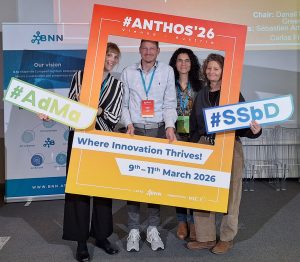
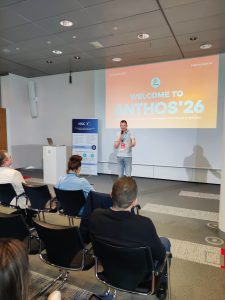
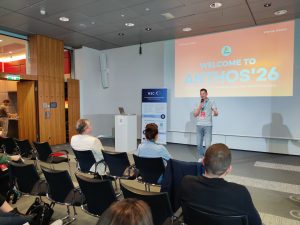
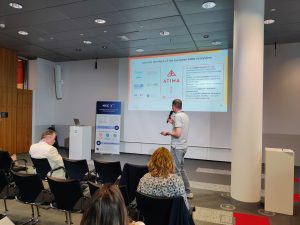
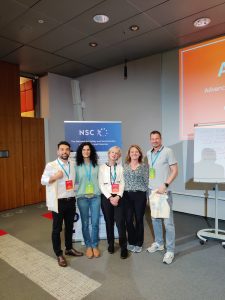
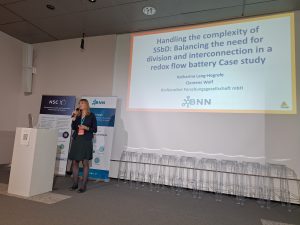
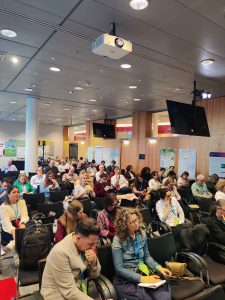
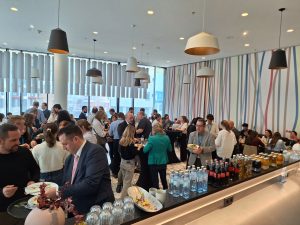
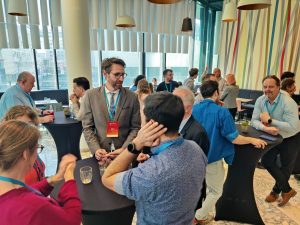
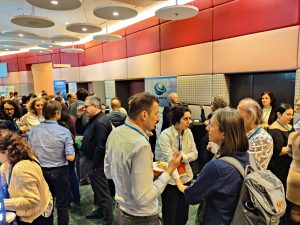
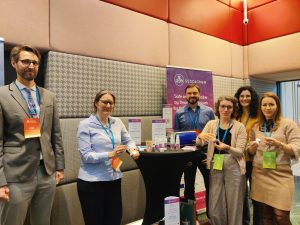
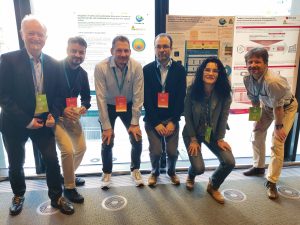
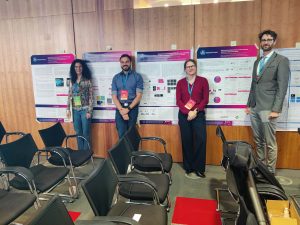
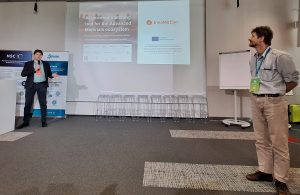
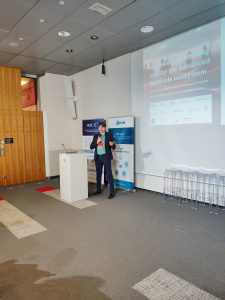
Some insight into the 3 days – Have a look at the pictures!