
 Search
 Members Area


Quarterly
28 Sep 2026
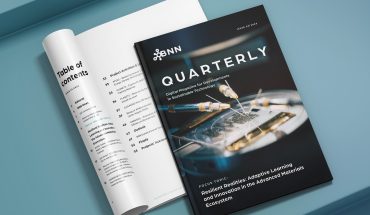
PFESS featured in BNN Quarterly 03/2026
Advancing Safe-and-Sustainable-by-Design solutions for PFAS-free redox flow batteries.
Wind and solar power are not always available when electricity is needed. Energy storage technologies help balance supply and demand by storing electricity generated during periods of high production and delivering it when consumption increases.
While lithium-ion batteries are widely used today, redox flow batteries offer a promising alternative for large scale, stationary energy storage. They can provide long service lifetimes, enhanced safety, and may even use electrolytes based on organic compounds derived from renewable feedstocks.
Some key components in redox flow batteries may contain per- and polyfluoroalkyl substances (PFAS), often referred to as “forever chemicals” because of their persistence in the environment. These substances can be found in materials such as ion-selective membranes, gaskets, and other battery parts. In addition, some battery designs may rely on nanomaterials or other substances that raise environmental and safety concerns.
Identifying and assessing safer and more sustainable alternatives is an important step towards future energy storage technologies. This project aims to evaluate potentially hazardous substances used in redox flow battery components and investigate potential alternatives.
Redox flow batteries offer a promising route for large-scale renewable energy storage.
To support their sustainable development, this project examines current materials and potential alternatives to enable safer and more sustainable battery technologies.
[Redox Flow Batteries (RFBs) are emerging technologies for large-scale energy storage and are important for climate neutrality, grid stabilization and peak shaving. However, they have their own environmental footprint and can contain hazardous substances such as the ‘forever chemicals’ perfluorinated alkylated substances (PFAS). For example, RFBs contain proton-selective membranes, mainly made of polyfluorinated polymers (PFSA or PTFE), gaskets (PVDF) and electrodes that can be F-doped or coated using PFSA binders. They may also contain potentially persistent nanomaterials, such as carbon nanotubes (CNTs) or graphene, or substances of concern or very high concern (SoC or SVHC), which could be replaced by PFAS-free substitutes.
This project aims to compare, identify and collect data on (potentially) hazardous substances in RFB components, as well as on PFAS-free alternatives (e.g., PEEK or nanocellulose membranes, non-halogenated gaskets, binders or flame retardants, etc.). Information on their technical and environmental performance will be collected in a RFB-specific product inventory, which will form the basis for life cycle considerations. In addition, a laboratory scale release and recycling test will be carried out. This will involve shredding membranes with and without PFAS to simulate recycling and re-granulation processes, during which aerosol measurements will be conducted. The resulting dust (ultra-/fine particles) and regranulates will be collected and further tested for toxicity. Tests will include ecotoxicity assessments using Zebrafish and Daphnia magna, and human toxicity assessments using skin and lung models. The primary data obtained from the product inventory, release tests and toxicity tests will be used for a chemical footprint assessment (CFP) using USEtox, and for a social life cycle impact assessment. The project results and a stakeholder workshop will be used to derive safe and sustainable by design (SSbD) related key performance indicators and recommendations for sustainable RFB systems free of hazardous substances. The expected results will provide technical guidance to support the production of PFAS-free RFBs to improve occupational health and safety and reduce environmental risks.]
Identify and document battery components that contain PFAS, persistent pollutants, or other substances of concern.
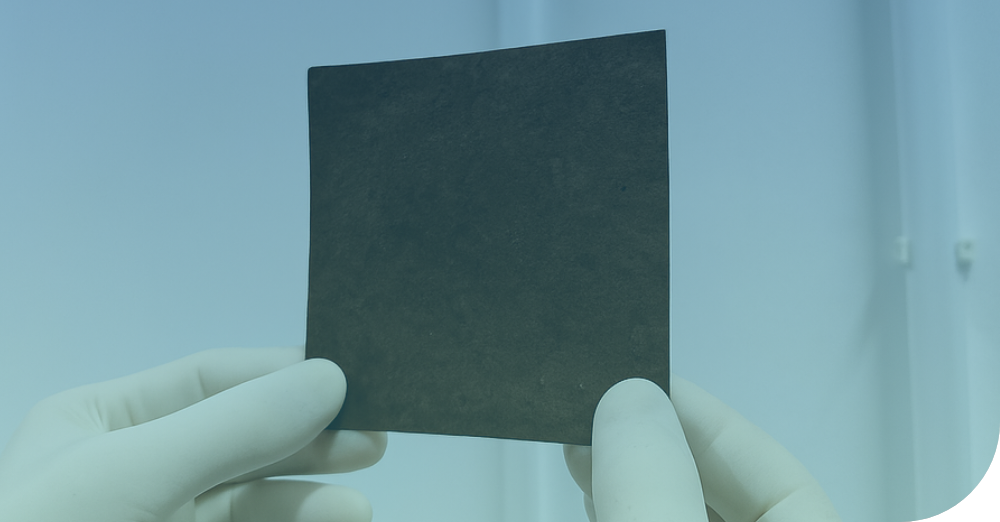
Study how battery membranes behave during mechanical processing and evaluate the potential human and environmental risks associated with released particles.
Assess the performance and stability of a PFAS-free membrane alternative and develop methods to detect degradation and estimate its service lifetime.
Determine the environmental and social impacts of conventional and alternative membrane materials across their life cycle.
Develop SSbD indicators and practical recommendations for researchers, industry, and policymakers.




You are currently viewing a placeholder content from Facebook. To access the actual content, click the button below. Please note that doing so will share data with third-party providers.
More InformationYou are currently viewing a placeholder content from Instagram. To access the actual content, click the button below. Please note that doing so will share data with third-party providers.
More InformationYou are currently viewing a placeholder content from X. To access the actual content, click the button below. Please note that doing so will share data with third-party providers.
More Information